
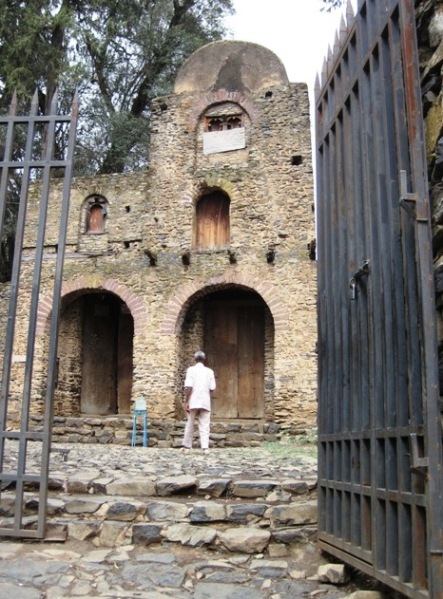
The imposing entrance to the Church of Debre Birhan Selassie, in the form of a standing Lion...
The Church of Debre Birham Selassie is a “must see” if ever you find yourself in Gondar… It was built by Emperor Eyasu, grandson of Fasilidis, in late 17th century. It was one of 44 churches built over the next century, and the only one still standing today. In 1881, the forces of the Mahdi, who ruled present day Sudan, and had triumphed over the British to take Khartoum, swept down from the north and into Ethiopia, determined to teach the uppity Ethiopians a lesson they would never forget.
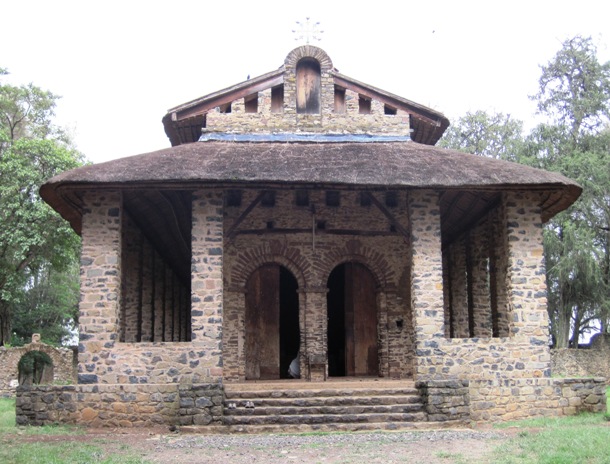
Front view of the 400 year old church...
Every church in Gondar, the capital at the time, was sacked, artifacts either removed or smashed, and the churches burnt to the ground… Those that wouldn’t burn were dismantled, and the stones from their walls scattered.
Legend has it that the church of Debre Birham was surrounded by Juniper and Olive Trees (some of them still standing today!) and when the Mahdi’s forces approached it, intent on mischief, a swarm of bees descended upon them from out of the trees, driving them away… And that is how the church came to be saved…
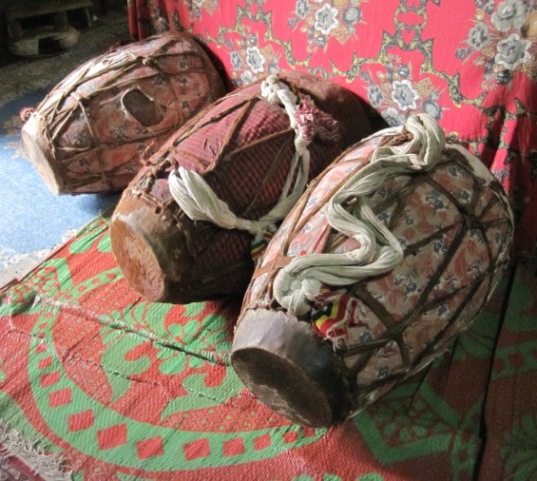
The ceremonial drums...
Entry to the compound in which the church is housed, is via a gatehouse built in the shape of a standing Lion, yet another sign of the importance the symbol of this animal has in the religious history of Ethiopia. The church itself sits in a high-walled compound, and its entrances are directly opposite the main gate. On the roof of the church is the Gondar Cross, which has seven ostrich eggs in its design, signifying the Seven Sacraments and the seven days that the Creation took…
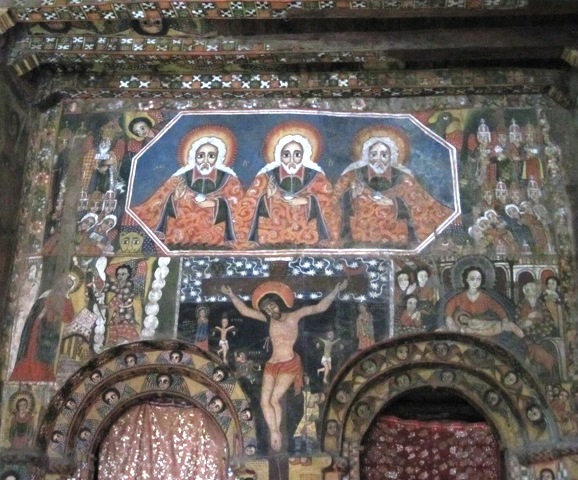
The front of the church and the arches leading to the inner sanctum...
Both Axum in the north and Lalibela to the east have their own specific design of cross. The seven pointed cross is always associated with Gondar. We removed our shoes at the main entrance to the church, and Steven touched his head to the big wooden door and blessed himself before we entered the gloomy confines of this amazing building.
The walls and ceiling of the church were painted by the first priest, Aba Heilie Meskal, in the 17th century, and it took him four years to complete. The ceiling of the church is covered with the faces of identical angels, while the walls are decorated to show the Life of Christ, and many other scenes of biblical significance… Three large ceremonial drums lie in front of the altar, and at the back of the church are two arches, entrance to the Holy of Holies, where only the senior priests are allowed.
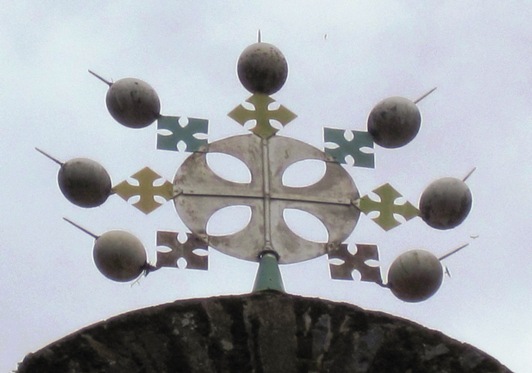
The Gondar Cross, with its seven ostrich eggs...
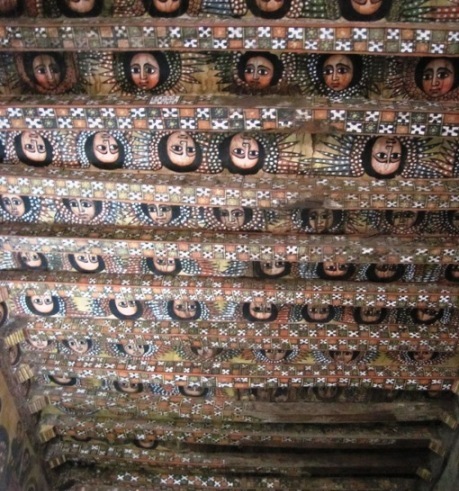
The ceiling is covered with the faces of identical angels...
To protect the paintings, flash photography is not allowed inside the church. The incense that the priests’ burn during religious ceremonies has done more than enough to damage them already…!! While we moved from one set of paintings to the next, Steven whispering his explanations of each to me, a priest sat quietly by the door… It quickly became clear that he understood English, as he occasionally either corrected something that Steven was saying, or added to the explanations I had been given. My guide would listen carefully, then bow his head in the direction of the priest and quickly relate whatever the priest had just mentioned to him…
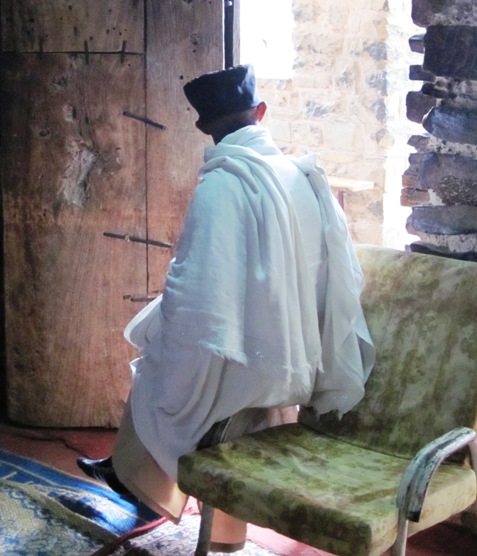
The Priest sat quietly by the door, listening to my guide and making the odd comment...
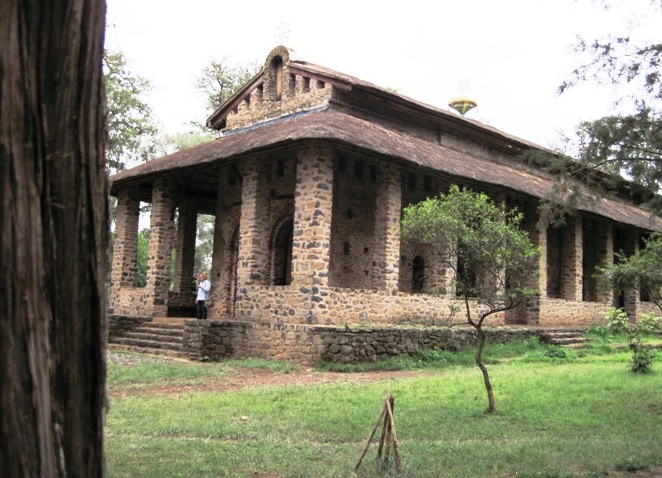
From under the Juniper Trees, I stood imagining the swarm of bees that saved the church in 1881...
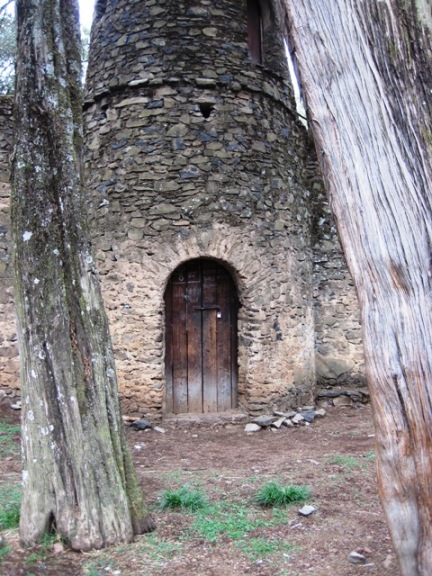
One of the many small gatehouses that once made entry to the churchgrounds possible. They are all shut and barred today...
We collected our shoes from where we had left them at the entrance and then walked around in the grounds. I wandered off on my own, stopping in the scant shade thrown by the Juniper Trees, and imagined the swarm of bees that had descended from them to save the church hundreds of years ago…
It is a great pity to see such an important historical building in a state of disrepair. There does not seem to be enough money even to keep the grounds clean… The thatched roof was looking taty in many places, and I was told that every six or seven years, the local people re-thatch the building themselves, in their own time and at their own expenses… Bits of plastic are blown about in the wind, pieces of corrugated iron sheeting lean up against the walls and gateways into the grounds… The place is a mess, and yet in the middle of all this stands this almost 400 year old church, an icon in the history of this country… The Government of Ethiopia seemingly does absolutely nothing to look after its monuments, relying on funds from donor nations to keep the churches renovated, but barely functioning… If these churches and castles had been in any western country, they would no doubt be in pristine condition, with manicured lawns and gardens…
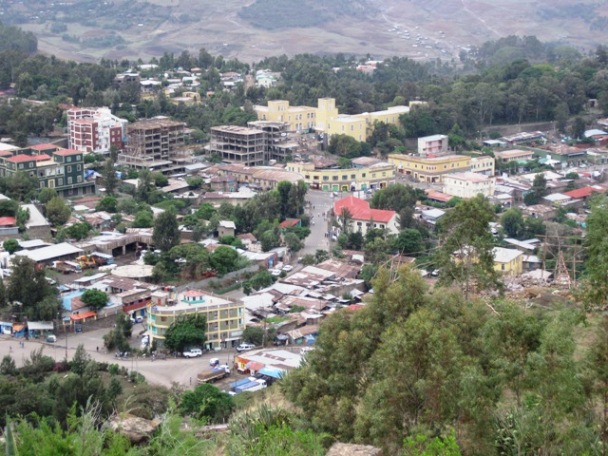
View of Gondar from high above the town. The yellow buildings were all built by the Italians...
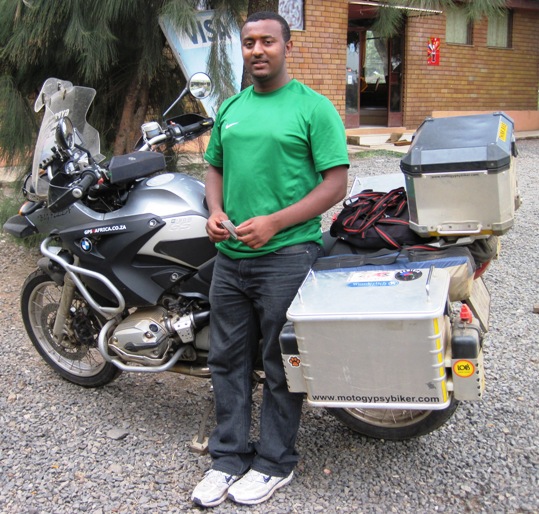
My guide, Samy, who knows more about the area and its historical significance than most others...
After my visit to the church, we met up again with Samy, and he and I went up to the Doha Hotel above the town to have a cup of coffee, and watch the sun go down… It was too cloudy and cold to enjoy the later, but we did enjoy a cup of the former, while Samy described what he did and how he had stared out in the tourist business… As a young boy, he used to shine shoes at the very hotel where we were now enjoying our coffee… A great story and one that he was understandably proud of… If you need a guide in Gondar, or to take hikes into the Simien Mountains, then Samy is the man to make all the necessary arrangements for you, including car hire and hotel reservations… He can be contacted on +252 918 150 409, or email at tesfahundere@yahoo.com . He also mentioned that he had guided Ewan McGregor and Charley Boorman when they passed through here on their “Long Way Down”…
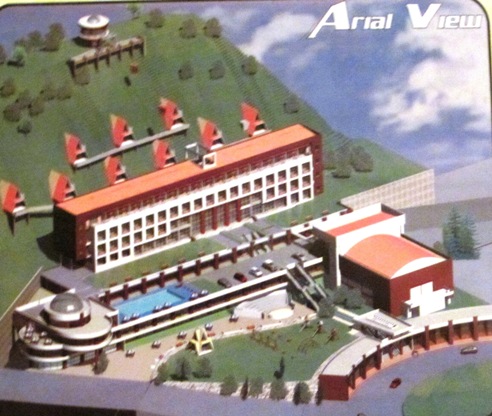
Artists impression of the Landmark Hotel project...
Back at the Land Mark hotel, I was pleasantly surprised to be invited to supper by the manager, who gave me a rundown of what the future plans for the hotel were… And what big plans they have…!! The present hotel will eventually be demolished, and its place a thoroughly modern hotel will come to life. The main building is already in progress, as is a restaurant high on the rocky hill above, where a cable car will take guests to and from their dining experience. A commanding view of the town will be the focal point of this restaurant. It is hard to believe that someone has the vision and determination to build something like this in Gondar, and I wish the owners and managers all the luck with its future success…
I was offered the use of the hotels internet service, but after the ride today and the various visits to the wonderful sites in Gondar, I decided to wait and see if I could get access in Southern Sudan, and went to bed early instead…

The new sits over the old... The Landmark Hotel is taking shape. The restaurant will be situated on the hill above it...
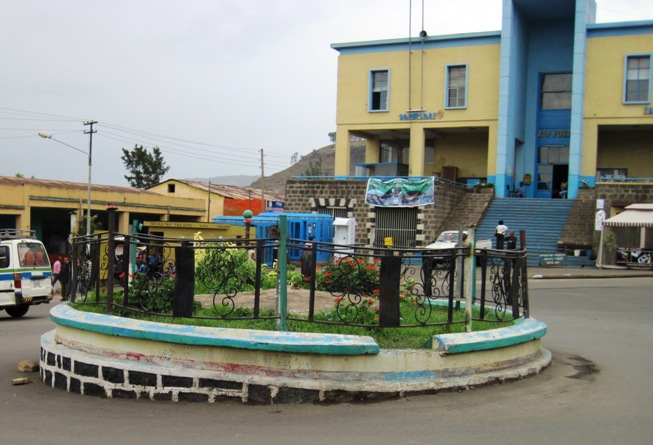
The central Piazza in Gondar...
Today would be my last full day in Ethiopia, and I had enjoyed the immense differences in the culture and the people I had found here, in comparison to those further south… Ethiopia and its people deserve a better chance at a future with less control than the present government has over their lives, but like so many other African countries, the grip on power is not easily loosened and the people have long ago given up on the power of the ballot box… Many Ethiopians I spoke to found the fact that the word “Democratic” was part of the country’s name, a huge joke, and advised that Ethiopians had long ago decided that a smile and positive attitude would eventually see them through the tough times they had experienced in the last few decades…
I wish them well…
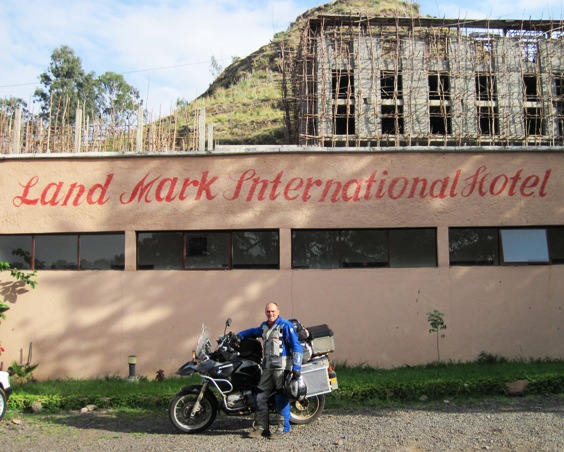
Last day in Ethiopia... Land Mark Hotel, Gondar.
©GBWT 2010
It appears that you could really have a spiritual journey through the history of Ethiopia. Great stuff – thank you for sharing !